How do you fund a future that could cost up to $2.4 million when a single bank account exceeding $2,000 can trigger a total loss of essential benefits? It is a terrifying paradox. For most parents, financial planning for autistic children feels less like traditional investing and more like a high-stakes rescue mission. You worry about who will step in when you no longer can. You fear the maze of legal jargon and an SSI benefit rate of $994 per month that barely scratches the surface of real-world needs. The weight of these decisions is heavy, and the fear of making a mistake is real.
We agree that the complexity of this journey is overwhelming. The stakes are simply too high for guesswork. This guide provides the clarity you need to protect your child’s government eligibility while building a private surplus for their long-term care. You will learn how to coordinate tools like ABLE accounts and Special Needs Trusts to create a seamless transition into their “second lifetime.” We will outline a clear, actionable roadmap that replaces your anxiety with the quiet confidence of a secured future.
Key Takeaways
- Understand the “Two Lifetimes” framework. You’ll learn to secure your own retirement while simultaneously providing for your child’s entire future.
- Learn to protect essential SSI and Medicaid eligibility by avoiding common asset mistakes that put government benefits at risk.
- Master the coordination of Special Needs Trusts and ABLE accounts to shield an inheritance without losing access to daily liquidity.
- Identify your “Retirement for Three” gap to determine exactly how much private funding is needed beyond basic government support.
- Discover why specialized financial planning for autistic children is the only way to move from high-stakes anxiety toward a state of structured, long-term calm.
What is Financial Planning for Autistic Children and Why is it Different?
Most parents view estate planning as a way to pass down what they’ve built. For families with neurodiverse children, the goal changes. Here, financial planning for autistic children is the deliberate coordination of private wealth, legal structures, and government eligibility. It isn’t just about saving for a rainy day. It’s about engineering a fortress around your child’s future. The stakes are absolute. While traditional planning focuses on the efficient transfer of assets, this specialized approach focuses on protection and continuity.
We call this the “Two Lifetimes” concept. You aren’t just planning for your own retirement. You’re planning for the remainder of your life plus the entirety of your child’s. This “Retirement for Three” math is daunting. If you treat your child’s future like a standard inheritance, you risk a catastrophic collapse of their support system. A single mistake can instantly disqualify them from Supplemental Security Income (SSI) and Medicaid. The urgency is real. Waiting until “later” often means missing windows for tax-advantaged savings or failing to establish the protective barriers your child will need on day one of their adulthood.
The Core Objectives of an Autism-Specific Plan
The primary mission is simple: never let private assets jeopardize public help. Programs like SSI provide a baseline for food and shelter, while Medicaid covers essential health supports. Your plan must fill the gap between that baseline and the quality of life you want for your child. It also ensures a seamless transition. When you’re no longer there to advocate, the plan acts as your voice, directing trustees and guardians to maintain the standards you’ve set. It provides a structured calm in the face of an uncertain future.
Common Financial Pitfalls to Avoid Early On
Many well-meaning families fall into legal traps. Leaving a direct inheritance is the most common error. Because SSI has a strict $2,000 resource limit, a modest gift from a grandparent can halt benefits. Some parents try to solve this by “disinheriting” the child and leaving funds to a sibling with the “understanding” they’ll provide care. This is incredibly risky. That money is then subject to the sibling’s creditors, divorces, or lawsuits. It leaves your child with no legal claim to their own support.
Others use standard “boilerplate” trusts found online. These documents often lack the specific language required to be a valid Special Needs Trust. Without the correct provisions, the government views those funds as being “available” to the child, leading to an immediate loss of benefits. Proper financial planning for autistic children requires a steady hand to navigate these nuances and avoid the irreversible loss of resources.
Navigating the Government Benefit Landscape: SSI and Medicaid
The foundation of any safety net rests on two pillars: Supplemental Security Income (SSI) and Medicaid. For 2026, the federal benefit rate for SSI is $994 per month. It’s a modest sum intended to cover the bare essentials of food and shelter. While a 2.8% cost-of-living adjustment (COLA) provides a slight buffer against inflation, this income alone is rarely enough to provide a high quality of life. However, the real danger isn’t the low payment. It’s the “asset limit trap.” If your child’s countable resources exceed $2,000, their benefits stop immediately. This rigid threshold makes financial planning for autistic children a delicate balancing act. You must provide for their comfort without accidentally triggering a total loss of support.
Protecting SSI Eligibility Through Strategic Titling
The Social Security Administration cares more about who owns the asset than what it’s worth. Even a small savings account in your child’s name can cause a crisis. You should audit every account today. Check for UTMA or UGMA accounts, old savings bonds, or even life insurance policies where the child is the direct beneficiary. If assets are in the child’s name, they must be spent down or moved into a protective vehicle before the child turns 18. A representative payee can then manage the monthly SSI funds to ensure they’re used for the child’s benefit while maintaining strict compliance with SSA rules. For a deeper dive into these requirements, the Financial Planning Tool Kit offers additional resources to help you organize your records.
The Critical Link Between Medicaid and Long-Term Care
Medicaid is often the only way to access high-cost services like residential housing or adult day programs. Across the country, many families face significant waitlists for crucial developmental disability waivers, making the loss of Medicaid eligibility a particularly devastating setback. Private wealth can supplement these services, but it can’t easily replace the comprehensive medical and long-term supports Medicaid provides. Because Medicaid is a means-tested program, eligibility depends entirely on staying under that same $2,000 resource limit. Understanding these nuances is the first step toward building a plan that actually works. If you’re ready to move toward a state of structured calm, our specialized consultation can help you audit your specific situation and protect your child’s future.
The Essential Tools: Special Needs Trusts and ABLE Accounts
Choosing between a Special Needs Trust and an ABLE account is a common point of confusion. Many parents ask which one is better. The truth is that effective financial planning for autistic children often requires both. Think of the trust as a secure vault for the long term and the ABLE account as a flexible tool for today. While they serve different purposes, they work together to shield your child from the $2,000 asset limit trap. As highlighted in Financial Planning 101, the foundation of a secure future is knowing which tool fits which specific need. Coordination is the key to a plan that actually works.
A Third-Party Special Needs Trust (SNT) is the gold standard for protecting an inheritance. It’s a legal vehicle funded by anyone other than the child. Because the child doesn’t own the assets, the funds don’t count against their SSI or Medicaid limits. Crucially, Third-Party trusts don’t require a “Medicaid payback” upon the child’s death. This means any remaining funds can stay within the family. In contrast, a First-Party trust, funded with the child’s own money, must reimburse the state for medical costs. This distinction is vital for preserving family wealth across generations.
When to Use a Special Needs Trust
The SNT is designed for significant assets that require professional oversight. If you’re naming your child as a beneficiary of a life insurance policy or leaving them a home, those assets must flow into the trust. It provides a structured way to manage wealth through a trustee who understands the child’s needs. This ensures that a large windfall doesn’t accidentally trigger a benefit termination. For more on how these funds are grown and protected, see our guide on Special Needs Trust Asset Management: Growth and Protection.
The Flexibility of the ABLE Account
The ABLE account, or 529A, offers a different kind of relief. It provides liquidity and autonomy. For 2026, the annual contribution limit has risen to $19,000. These accounts are tax-advantaged; the growth is tax-free when used for “qualified disability expenses” like transportation, health prevention, or housing. One of the greatest benefits is that the first $100,000 in an ABLE account is ignored by the SSA. It’s the perfect tool for managing daily spending and smaller savings without the administrative weight of a full trust. Recent 2026 updates also mean eligibility now includes individuals whose disability began before age 46, opening this tool to more families than ever before.

Quantifying the Future: The Retirement for Three Calculation
Most retirees calculate how much they need to sustain themselves for twenty or thirty years. For you, the math is different. You’re solving for “Retirement for Three.” This means your wealth must support two parents through their golden years and then continue providing for your child’s entire life. It’s a daunting realization. When you look at the 2026 SSI federal benefit rate of $994 per month, you quickly see the “Gap.” If your child’s actual cost of living, including specialized care, housing, and social activities, is $4,000 per month, there’s a $3,000 monthly deficit that government benefits won’t cover. Identifying this number is the first step in financial planning for autistic children. It moves the conversation from vague worry to concrete action.
Funding this gap requires a dedicated strategy. Since you won’t be there to earn an income forever, you need a self-funding mechanism that triggers exactly when it’s needed most. This is why life insurance is often the primary engine of a special needs plan. By naming a Third-Party Special Needs Trust as the beneficiary, you create an immediate pool of liquidity that can provide for your child’s quality of life for decades. To understand how to structure these policies correctly, explore our guide on Special Needs Life Insurance Planning: Funding the Future. If you’re feeling overwhelmed by the numbers, you can request a specialized consultation to help calculate your specific gap.
The Letter of Intent: The Blueprint for Future Care
A trust provides the money, but a Letter of Intent (LOI) provides the soul. It’s the “human” side of your data. This document tells future caregivers everything they need to know that isn’t in a bank statement. You should include medical histories, sensory triggers, and daily routines. What makes your child feel safe? Who are the friends they love to visit? An LOI isn’t a one-time task. It’s a living document. You should update it every year to reflect new social connections or changing preferences. Without it, even a well-funded trust leaves a successor guardian guessing about your child’s happiness.
While the LOI guides personal care, the broader quality of support services often depends on professional standards and ongoing development. To learn more about the specialist training available for the early childhood care and education sector, you can explore the resources from Canavan Byrne.
Coordinating Family Support and Extended Legacy
Your plan can be perfect, but a well-meaning relative can still break it. You must educate grandparents and siblings about the “no direct gifts” rule. A single $5,000 birthday gift or inheritance left directly to your child can derail their Medicaid eligibility. Instead, relatives should use “pour-over” provisions in their own wills to direct assets into your child’s Special Needs Trust. It’s equally important to audit every beneficiary designation on your 401ks and IRAs. financial planning for autistic children only works when every piece of the family legacy points toward the same protective structure. Coordination isn’t just helpful; it’s a requirement for long-term security.
Next Steps: Moving from Worry to Clarity
Moving from a state of high-stakes anxiety to structured calm doesn’t happen overnight. It requires a pivot from reacting to crises toward proactive engineering. The path we’ve outlined is clear. You must protect your child’s eligibility for means-tested benefits, fund the gap between government support and their actual needs, and document the nuances of their daily care. While the complexity of financial planning for autistic children can feel paralyzing, the relief of a finished roadmap is transformative. You aren’t just managing money; you’re securing a lifetime of safety for someone you love. The transition into their “second lifetime” should be a seamless handoff, not a fall into a void.
Why shouldn’t you use a generalist planner? Most financial advisors focus on a single lifetime. They don’t understand the specific language required for a Special Needs Trust or the $2,000 resource limits that still define SSI eligibility in 2026. They might inadvertently suggest a strategy that triggers a benefit loss. You need a steady hand in the storm. This is a mentor-like expert who has seen the consequences of inaction and is driven by a desire to protect. Specialized expertise from firms like Timothy Roberts & Associates, LLC ensures that your private assets and government resources work in harmony rather than in conflict.
Choosing a Special Needs Financial Consultant
When selecting an advisor, look for the ChSNC® (Chartered Special Needs Consultant) designation. This indicates they’ve undergone rigorous training in the legal and financial nuances of disability planning. Ask about their specific experience in wealth management for Special Needs Trusts. Do they understand how to coordinate distributions without jeopardizing Medicaid? A Special Needs Financial Consultation is about more than just numbers. It’s about building a legacy that protects your child’s quality of life long after you’re gone.
Request Your ‘Planning for Two Lifetimes’ Guide
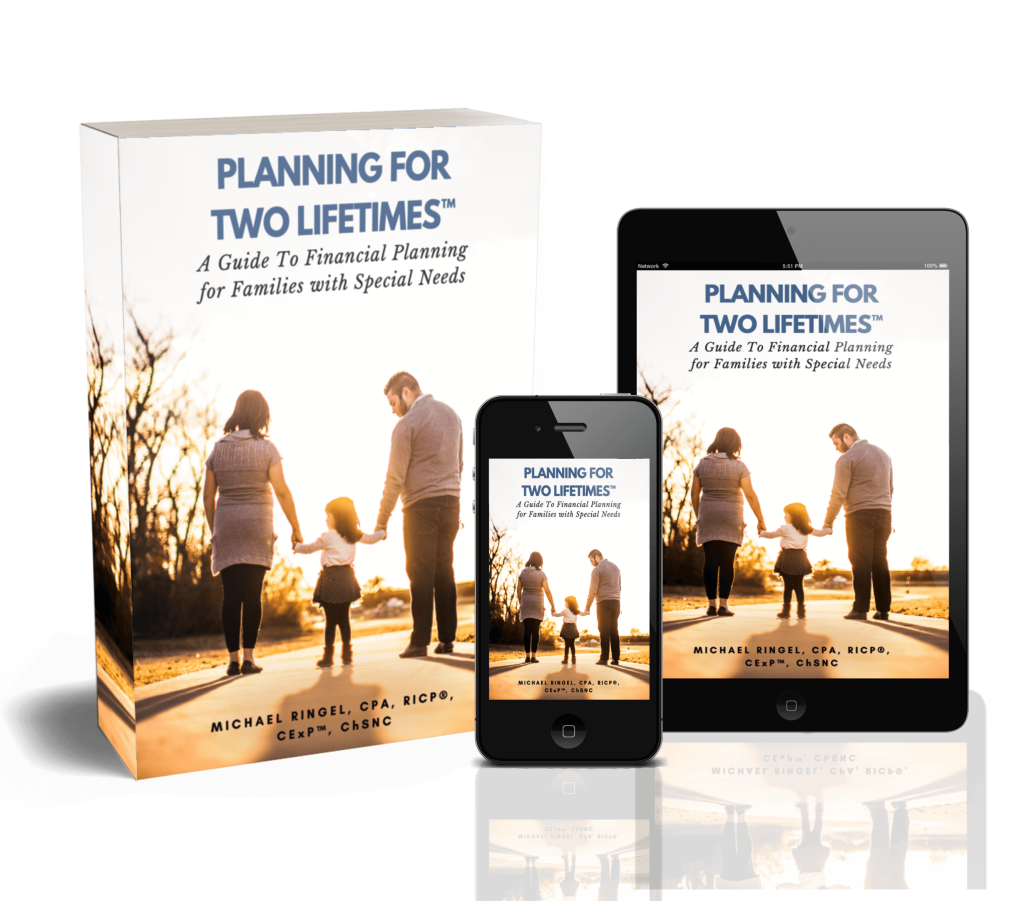
If you aren’t ready for a full consultation, the best starting point is our 100-page guide. It serves as a comprehensive resource for families who need to navigate the maze of estate planning and asset protection. It answers the questions that keep you awake at night and provides a clear framework for your “Retirement for Three” calculation. This financial planning for autistic children resource acts as your blueprint for future care. Don’t let another year pass in uncertainty. Request your copy of the Planning for Two Lifetimes guide today.
Securing a Future That Outlasts Your Own
You now have the framework to bridge the gap between basic government support and the quality of life your child deserves. By aligning your estate with the “Retirement for Three” math, you prevent common financial mistakes that jeopardize SSI and Medicaid eligibility. Effective financial planning for autistic children isn’t a luxury; it’s a vital necessity for their lifelong safety. We understand the heavy weight of these decisions. As a specialized division of Pearson Financial Group, we’ve developed comprehensive digital and physical planning resources to act as a steady hand during this journey. You don’t have to navigate the maze of trusts and benefit thresholds alone. Download the 100-page Guide to Planning for Two Lifetimes to start building your roadmap today. Take this first step to move away from high-stakes anxiety and toward a feeling of quiet confidence. Your child’s second lifetime depends on the preparation you begin now.
Frequently Asked Questions
Can an autistic child have a savings account in their own name?
Yes, they can, but it is rarely advisable. Once an individual’s countable resources exceed $2,000, they lose access to SSI and Medicaid. This is the “asset limit trap” that triggers benefit termination. Instead of a traditional account, consider an ABLE account. It allows for savings up to $100,000 without affecting SSI eligibility. Keeping money in a child’s name is a direct threat to their long-term security.
What happens to my child’s SSI benefits if they inherit money directly?
Their benefits will be terminated immediately. The Social Security Administration views a direct inheritance as a countable resource. If your child receives a windfall, you must report it. You’ll then face the stress of a “spend down” or the need to establish a First-Party SNT with a Medicaid payback clause. This is why financial planning for autistic children focuses so heavily on Third-Party trusts to bypass this crisis entirely.
How much money should I put into a Special Needs Trust?
You should fund the trust based on your child’s specific “Gap” calculation. If your child needs $3,000 more per month than the $994 SSI benefit provides, you must account for inflation and a lifetime of care. This often means providing hundreds of thousands, or even millions, in assets. Life insurance is frequently the most efficient way to ensure the trust has sufficient liquidity the moment it’s needed. Don’t guess at this number.
Is an ABLE account better than a Special Needs Trust for autism?
They are complementary tools, not competitors. An ABLE account is ideal for daily expenses and smaller savings; it offers tax-free growth and easy access for the individual. A Special Needs Trust is the gold standard for managing larger inheritances and real estate. Most families find that using both creates the most robust safety net. The ABLE account provides autonomy, while the trust provides the long-term infrastructure for care.
Who should I choose as a trustee for my child’s trust?
Choose someone who is both financially responsible and deeply familiar with your child’s needs. Many parents opt for a “co-trustee” arrangement. This pairs a trusted family member, who provides the personal touch, with a professional trustee or corporate entity. The professional handles the complex tax filings and distribution rules, while the family member ensures the child’s sensory and social preferences are always respected. This balance provides a steady hand in the storm.
What is the difference between a first-party and third-party special needs trust?
The difference lies in whose money is used to fund the trust. A First-Party trust is funded with the child’s own assets, such as a legal settlement; it requires a Medicaid payback upon their death. A Third-Party trust is funded by you or other relatives. It doesn’t require any reimbursement to the state. This makes Third-Party trusts the preferred vehicle for preserving a family legacy while providing for your child’s future needs.
Can a Special Needs Trust pay for my child’s housing?
Yes, it can, but there are consequences to consider. If a trust pays for food or shelter directly, the SSA may reduce the monthly SSI benefit by up to one-third. This is known as In-Kind Support and Maintenance. A specialized advisor can help you weigh this reduction against the benefit of providing a higher standard of housing. Often, the trade-off is worth it for the child’s comfort and long-term stability.
Do I need a lawyer or a financial advisor for special needs planning?
You typically need both to ensure a plan is truly comprehensive. A special needs attorney is essential for drafting legal documents like trusts and powers of attorney. However, a specialized financial advisor manages the actual wealth within those trusts. They coordinate your private assets with government eligibility. Only a team approach can move you from high-stakes anxiety toward a sense of structured, long-term calm and security.